12 March 2012

Nepal - Pokhara Rain Day

Our first full day in Pokara was a wet one. I was scheduled to have a tandem flight with Brad, one of the guides, but that was called off for weather. Instead we hung out in our room and then went out for a walk around town in the afternoon when the rain finally let up.


Luckily, there was a Japanese restaurant at our hotel, so we didn't have to go out in the pouring rain to get food. I shot this photo from the shelter of the restaurant patio.


When the rain stopped, we walked down for our first view of the lake.


Where else can you run into a friend from home as you walk along a lake halfway around the world. Hi, Matt!


Blossoms and prayer flags.

Nepal - Durbar Square

First view of Durbar Square. We walked unmarked streets to Durbar Square our first morning in Nepal.


It is where Kathmandu's kings were once once crowned. Palaces and many temples.


The king's palace was moved to another site 100 years ago, but Durbar Square is still a draw for it's 17th and 18th Century architecture. We couldn't tell what was original, as much of the square was rebuilt after damage from an earthquake in 1934.


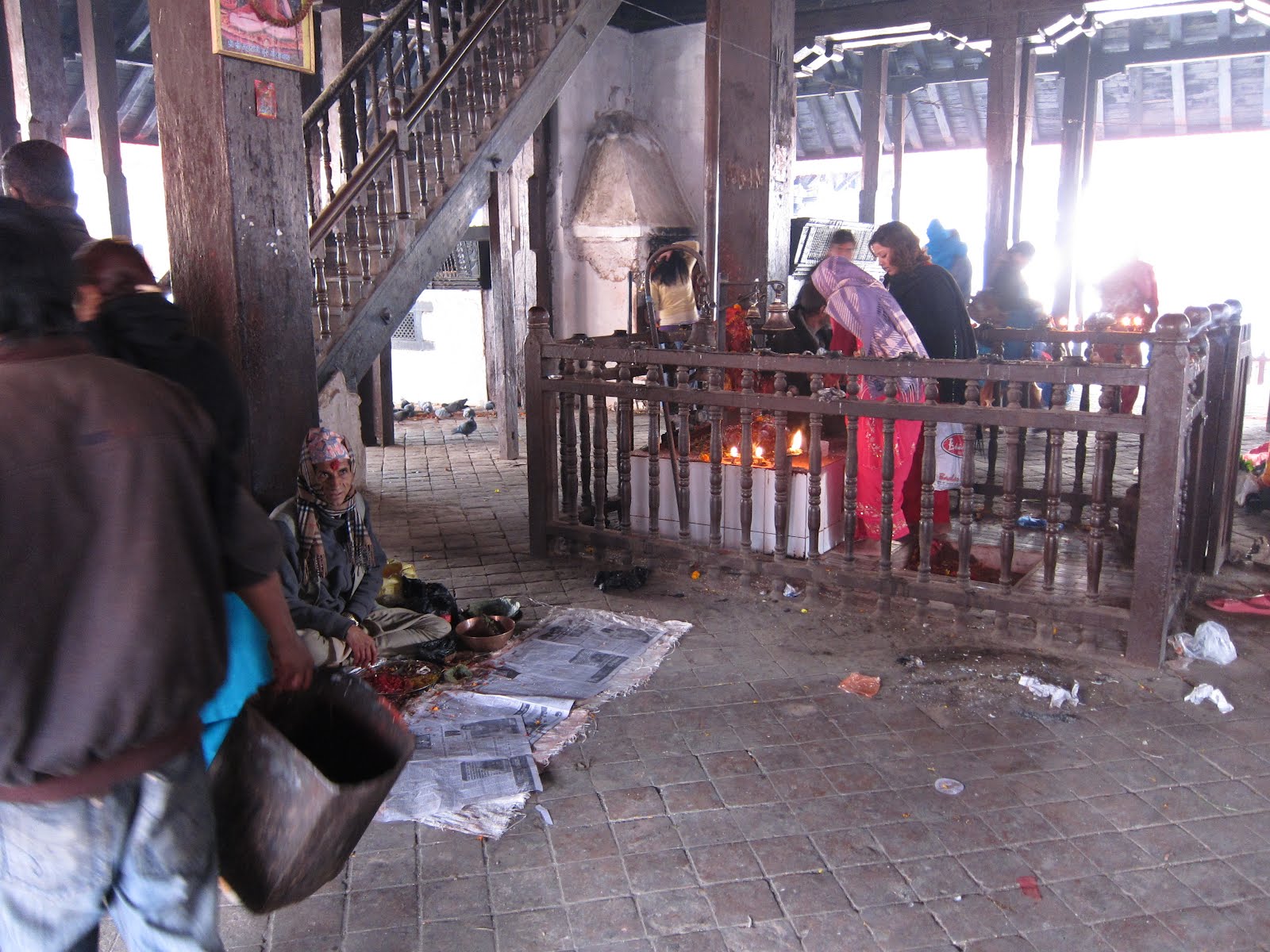
The Square's holy sites are still very much in use for Hindu observances.


At the Kumari house. The Kumari is a young girl who is worshiped as a goddess. Once a girl is selected as the Kumari, her feet must never touch the ground. She lives here, is tutored and cared for. At puberty, she loses her Kumari status and returns to her village. Our guide called up to the window to see if she would appear, but we were told to return later. We did not.


Marigold in wood screen. The day we were there, vendors were selling strings of marigolds to be used as offerings at the temples. They were so colorful. I am still surprised this is the only picture of a marigold I got that day.

05 March 2012

Nepal - Kathmandu, First Look

Kathmandu is impossible to describe. The first impression is total chaos, but it is more organized than that I'm sure. I suspect the order that does exist is simply a kind I can't understand or recognize very well. I should have taken video. The photos don't catch the constant motion in all directions. Wikipedia says close to a million people live in Kathmandu. I don't think I noticed any street lights (see power note below), but traffic was directed by officers at major intersections. Otherwise, the horn is the main form vehicle to vehicle, vehicle to pedestrian, vehicle to cow communication. Okay, I didn't see any cows in the middle of traffic in Kathmandu, I don't think. The eye quickly gets used to new environments.

Check the thick conglomeration of powerlines on each pole. Electrical service is a trick anyway. It's on several hours at night and several hours during the day, off the rest of the time. I've heard there's more power during the rainy season when there's water to run over hydroelectric dams.


Notice the very large tree on the roof.


Cooper pots and cool windows.


Old door.


In Thamel, an old part of town where tourists gather, the shops are open mid-morning to night and the streets are full of cars and motorcycles. But, before 9 a.m. the street is a vegetable market. I could have spent hours inspecting the different greens, clovers, mushrooms, spices and dried things for sale.


Chris stopped to inspect the alligator gar (?).


We did find a few quiet places in Kathmandu. This courtyard was one of them.

Nepal - Carried and Built by Hand

The physical labor of daily life in Nepal is well beyond what we're accustomed to, although there are surely segments of the population who escape it. Not too soon after arrival, we became aware of how much our environment was shaped by the human hand. Not by the human hand running a power tool or other machine, but by hands working with hand-held tools--hand-hewn beams inside, stones hammered to gravel at construction projects, terraces cut into every hill around for farming.

It looks like this man is carrying a cabinet of some kind. One day in Kathmandu we saw two men delivering furniture, each with a couch on his back in the same fashion this man is carrying his load.


In rural areas, I saw groups of women walking (and talking and laughing) together carrying their loads in baskets strapped across their foreheads. I realized this practice wasn't confined to the countryside when I saw these women at Swayambhunath temple complex in Kathmandu.


On morning runs, I'd meet women carrying baskets of greens to town to sell to restaurants. At construction sites, building materials were carried up and down the same way. Hard work, all of it.


Water buffalo eat a lot. In an area without a lot of grass pastureland gathering food for the beasts seemed like a full time job.

Nepal 02.06-02.26.12

Where to start. This was such a amazing trip. I have so many pictures. I decided to start with two panoramas--to make a gut decision in selecting two that reflect my lasting impressions of Nepal. I will fight the urge to say why I was drawn to these two images. Many more pictures and descriptions to come. Time for talk later.

Kathmandu, Durbar Square


Sirkot, Himalayas

24 October 2011

Women's Fly In 10.24.11

The end of a most-excellent day--a sunset tandem with my favorite co-pilot.


I didn't take enough pictures today. I should have documented relaxed chatting with friends at the condo, a great visit with the Harbinsons (who flew up for the day), my first launches off Green Monster (run, run, run), and a sunset tandem. Life is good.

Soccer Kids 9.10.11

I finally made it to the Tri-Cities during soccer season. I've been wanting to get over to watch Bevan play since he started a few years ago. Ended up my timing wasn't too bad. It just happened to be Erika's very first game, too.

Bevan doing drills during warm up.


Lining up for more drills.


Erika running after the ball.


Lynn, Erika and I on the sidelines at Bevan's game.